Lorem ipsum dolor sit amet, consectetur adipiscing elit, sed do eiusmod tempor incididunt ut labore et dolore magna aliqua. Ut enim ad minim veniam, quis nostrud exercitation ullamco laboris nisi ut aliquip ex ea commodo consequat. Duis aute irure dolor in reprehenderit in voluptate velit esse cillum dolore eu fugiat nulla pariatur.
Block quote
Ordered list
Unordered list
Bold text
Emphasis
Superscript
Subscript
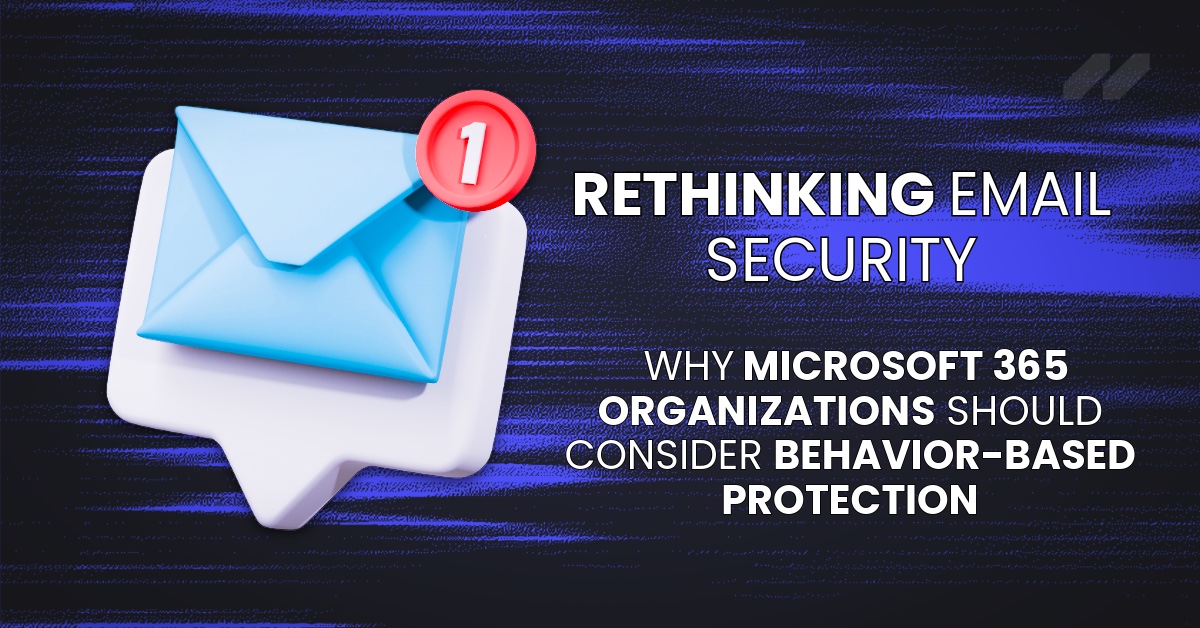
Email security for organizations running Microsoft 365 is getting harder, not easier. Business email compromise (BEC) attacks continue to evolve, routinely slipping past traditional secure email gateways and even Microsoft’s native defenses. Highly convincing impersonation attempts (like “fake CEO” or trusted vendor emails) still land in inboxes every day.
The data highlights just how urgent the problem has become. BEC attacks rose by roughly 30% in 2025 and now account for more than half of all social engineering incidents. The average cost of a successful breach has climbed to nearly $5 million. Legacy filtering layers still catch a lot of noise, but too often they miss the threats that matter most.
Modern BEC scams are polished enough to fool seasoned professionals, not just unsuspecting end users. Attackers increasingly rely on context, timing, and trust, rather than malware or malicious links, making them far harder to spot with signature-based tools.
At the same time, traditional email security tools are placing a growing operational burden on IT and security teams:
In practical terms, phishing is a time sink. For a small security team, even a handful of daily phishing reports can easily translate into 15+ hours per week per analyst spent on investigation, remediation, and user support.
This is why newer approaches to email security are gaining traction. Instead of reacting to every suspicious message, organizations are looking for tools that understand what “normal” looks like inside their business, and can intervene before employees ever see the threat.
Abnormal takes a fundamentally different approach from traditional secure email gateways. Rather than relying on static rules, signatures, or known indicators of compromise, Abnormal uses behavioral AI to analyze how your organization actually communicates.
Because it integrates directly with Microsoft 365 via API, Abnormal has access to rich identity, relationship, and behavioral signals — well beyond what’s visible at the SMTP layer.
Key differentiators include:
This combination of context, automation, and adaptive learning helps close the gaps that legacy gateways and static policies often leave behind.
No email security platform is perfect, and Abnormal is no exception. Some reviews note that traditional vendors like Proofpoint may catch certain malware or malicious URLs more effectively due to deep sandboxing capabilities. That coverage, however, often comes with greater complexity, higher administrative overhead, and frequent tuning.
In practice, many organizations are choosing Abnormal alongside existing tools. Phishing remains the dominant attack vector, accounting for roughly 70%+ of sophisticated email attacks, and it’s increasingly social and context-driven rather than payload-based.
Security teams are showing a clear preference for solutions that:
When you look past breach headlines, the real cost of phishing shows up in staff hours:
This is why organizations increasingly track KPIs like:
Tools that reduce false positives and catch threats earlier don’t just improve security—they return time to your team.
For organizations facing rising BEC risk and growing SOC workload, relying solely on signature-based or gateway-only defenses may leave costly gaps. Abnormal’s behavior-based, cloud-native approach makes it a strong candidate for Microsoft 365 environments looking to:
As with any security investment, evaluation should consider threat coverage, operational impact, and how well the solution integrates with your current stack.
At Hypershift, we help organizations assess email security through both a risk and time-cost lens. If you want to learn more about Abnormal, or determine whether it fits your environment, we’re happy to walk through it with you.
Book a quick chat with Hypershift below.

.jpg)