Lorem ipsum dolor sit amet, consectetur adipiscing elit, sed do eiusmod tempor incididunt ut labore et dolore magna aliqua. Ut enim ad minim veniam, quis nostrud exercitation ullamco laboris nisi ut aliquip ex ea commodo consequat. Duis aute irure dolor in reprehenderit in voluptate velit esse cillum dolore eu fugiat nulla pariatur.
Block quote
Ordered list
Unordered list
Bold text
Emphasis
Superscript
Subscript
“Move fast and break things” can work, until the “things” are identities and data. Good news: guardrails don’t slow you down when you build them in; they just stop you from speed-running into incident response.
If you're looking for more guidance, check out our Azure Consulting services.
Think of this as a practical tour, not a purity test. You’ll see what “secure-by-default” looks like in real Azure estates where legacy apps exist, mergers happen, and Friday deploys (somehow) still sneak through. Our aim isn’t to win a security debate. Our goal is to help your team ship faster with fewer regrets. If exceptions crop up, we’ll call them out and offer safe detours.
Here are your questions, answered…
Can access be both simple and strict?
Yes, if elevation is temporary and provable. Enforce MFA everywhere, use phishing-resistant methods for admins, and require PIM for just-in-time roles. Conditional Access is tightened by risk (device, location, sign-in context).
Gentle nudge: If someone “needs” a standing Global Admin, what they really need is a hug and a change request.
What does “private by default” actually look like?
Close public doors. Put Azure SQL/Storage/etc. behind Private Endpoints, segment VNets with NSGs/ASGs and a default-deny stance, and funnel egress through inspection points.
Reality check: Some tools insist on public endpoints. The fix is not “fine, open it.” It’s brokered access, or a different tool.
Why is this non-negotiable in 2026?
Because the internet is a 24/7 port-scan festival, use Azure Bastion or Defender JIT; never expose 3389/22.
Truth bomb: If attackers are finding you before your team does, you’re basically hosting an open house.
Can detection be more than a to-do list?
Treat Azure Security Benchmark as table stakes, then wire Defender for Cloud to policy initiatives so remediation is enforced, not emailed. Send signals to Sentinel (or your SIEM) and automate common responses with playbooks.
Pragmatism alert: “We detected it” is not a good ending, but “we auto-contained it in 90 seconds” is.
Standardize Diagnostic Settings to Log Analytics, with retention matched to ops/compliance/security. Turn on soft delete + purge protection in Key Vault and keep it on private endpoints.
Unfun fact: The only thing worse than losing a secret is not having an audit trail to prove what happened.
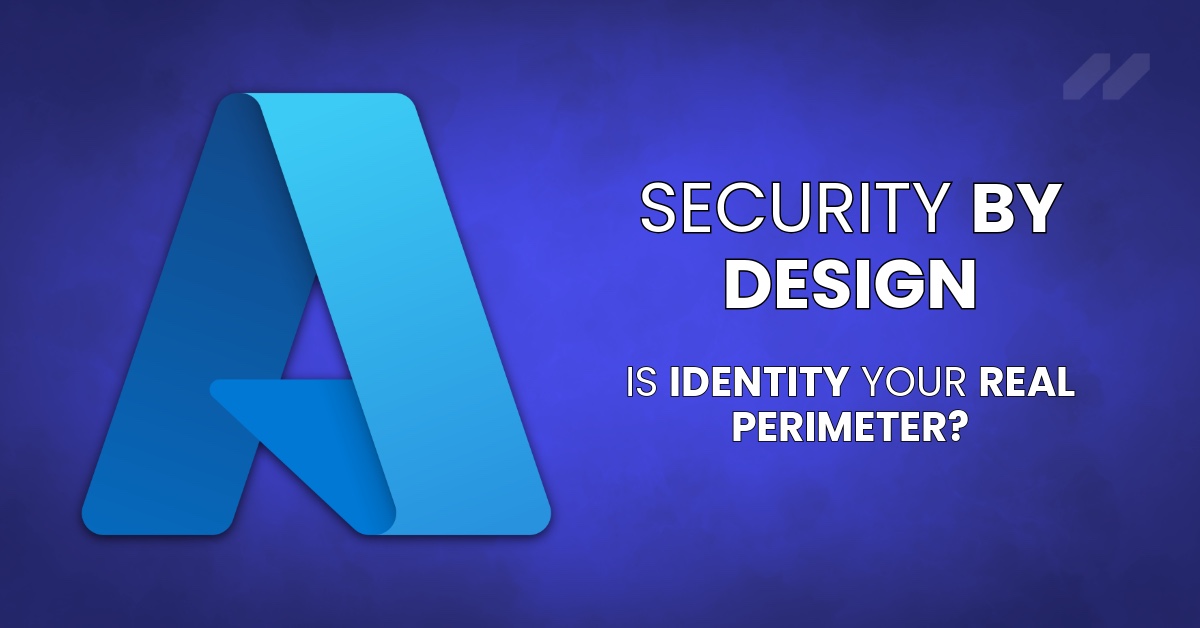
Identity is the perimeter; automation is the seatbelt. If “secure-by-default” sounds good but bandwidth is scarce, book a quick session, and we’ll map the fastest path:


.jpg)