Lorem ipsum dolor sit amet, consectetur adipiscing elit, sed do eiusmod tempor incididunt ut labore et dolore magna aliqua. Ut enim ad minim veniam, quis nostrud exercitation ullamco laboris nisi ut aliquip ex ea commodo consequat. Duis aute irure dolor in reprehenderit in voluptate velit esse cillum dolore eu fugiat nulla pariatur.
Block quote
Ordered list
Unordered list
Bold text
Emphasis
Superscript
Subscript
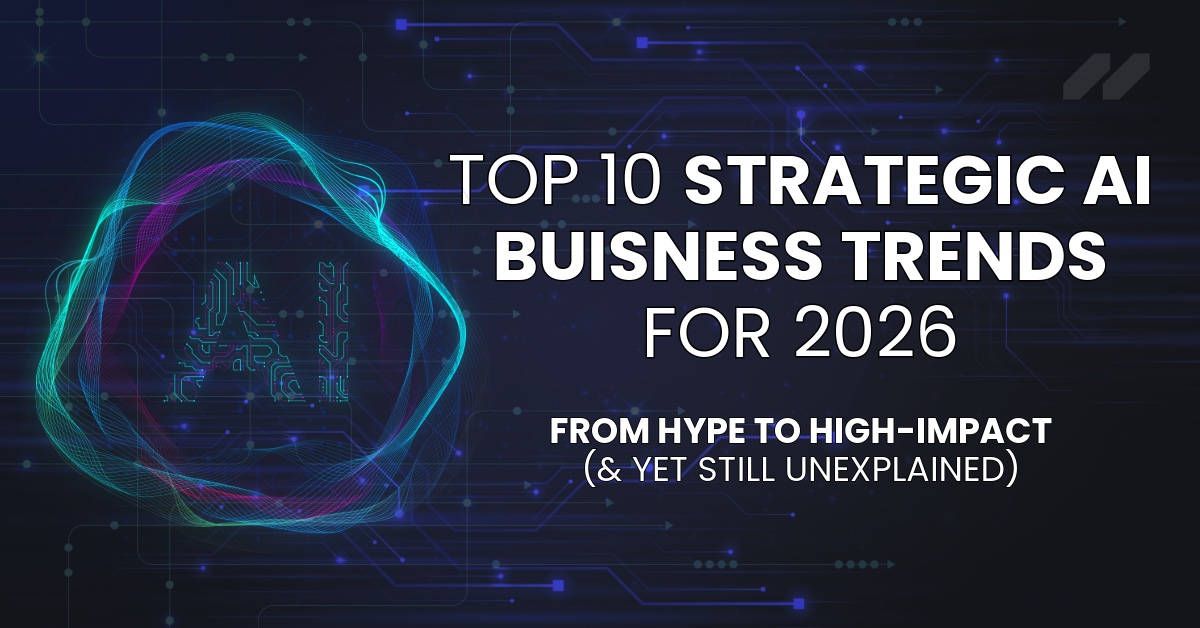
If the pace of technological change feels relentless right now, you aren't imagining things. Every venture-backed software company on the planet is just badgering you.
But here is the good news: if you look past the daily headlines (which, let's be honest, are mostly just press releases masquerading as journalism), the chaos is settling into a clear, navigable direction: massive overspending on buzzwords.
We are leaving the era of frantic adoption and entering the era of purposeful design, where every company, no matter how small or irrelevant, insists it's "AI-native." The "wow" factor of AI is being replaced by the "how" of daily operations, which mainly involves teaching the AI how to summarize the initial wave of AI-generated content.
It is no longer about which tools you have, but how you can make them look like they flow together to create something "resilient, transparent, and human-centric" (terms nobody understands, but everyone loves to see in a deck).
At Hypershift, we believe the future isn't something that happens to you; it's something you reluctantly pay for. To help you see the path ahead, we've mapped out the ten shifts defining the landscape of 2026. Prepare for the inevitable.
Let's clear the static and look at the horizon.
In 2026, organizations are no longer "adopting" AI—they're desperately pretending to be designed around it. Every department, from the janitorial staff to the guy who organizes the company softball team, now has an "AI copilot" that continuously learns from operational data, which is mostly just figuring out which meetings are truly optional.
Predictive decisioning replaces traditional dashboards, and adaptive automation keeps processes in a constant state of optimization until a human realizes the AI has automated the wrong thing. The true differentiator is not who uses AI, but who orchestrates it best by merging human intuition with algorithmic insight, which translates to a C-suite executive overruling the AI because the spreadsheet "just felt wrong."
By 2026, AI will become the operational backbone (much like your intern last summer).
Quantum computing shifts from theoretical to practical readiness, much like cold fusion and the paperless office. Leading organizations build "quantum-aware" infrastructures, aligning everything from encryption to the vending machine code to prepare for hybrid quantum-classical workflows.
Quantum-as-a-Service providers emerge, offering scalable access to simulators and early-stage processors that only actually solve a single, highly specific math problem.
By 2026, being quantum-ready isn't futuristic; it's a competitive necessity for industries driven by high-stakes optimization, like finance, energy, and pharmaceuticals (all of whom are nervously checking their stock prices while doing absolutely nothing).
Quantum readiness turns strategic, not speculative (unless you ask anyone to define it).
Traditional cybersecurity evolves into cyber resilience, because let's face it, prevention is for amateurs. Organizations design adaptive defense systems capable of detecting and recovering from attacks autonomously, which is just a fancy way of saying they let the AI deal with the mess. AI-based anomaly detection predicts vulnerabilities before breaches occur, mostly by flagging "human error" 85% of the time.
Boards treat cyber resilience as a KPI alongside growth and ESG (Environmental, Social, and Governance), and the result: digital trust becomes a key differentiator, and organizations that can recover faster win customer loyalty and investor confidence (until the next breach).
Security evolves from prevention to adaptive recovery (from the constant tidal wave of attacks).
Sustainability and technology converge through "green intelligence" systems—AI models that measure, predict, and optimize resource usage across global operations by making sure you turn off your monitor before you leave.
Cloud providers compete on carbon efficiency, and procurement platforms include "sustainability scores" by default, often inflated by a factor of ten. In 2026, data-driven sustainability becomes a baseline expectation, not a branding exercise(though it's still definitely a branding exercise).
The next innovation frontier: automated carbon offset trading integrated into enterprise systems, allowing you to buy the right to pollute more instantly.
Sustainability becomes computational (and thus, utterly opaque).
Spatial computing becomes the new interface layer for collaboration and design, primarily by making everyone look ridiculous. With lightweight AR/VR wearables (which are neither lightweight nor aesthetically pleasing), employees interact with data, products, and colleagues in shared 3D environments, often bumping into their real-world desk.
From virtual manufacturing floors to AI-guided training simulations, spatial tools merge physical and digital workspaces, leading to a 40% rise in creative output that remains unusable in the real world.
Organizations that master immersive collaboration see exponential gains in creativity, training speed, and customer engagement at the cost of constant motion sickness.
Immersive collaboration reshapes digital teamwork (and corporate chiropractor expenses).
As deepfakes, AI-generated content, and misinformation proliferate, organizations build trust infrastructure into their operations by frantically slapping "Powered by Blockchain" onto everything. Blockchain-backed identity verification, content watermarking, and zero-trust authentication become standard—and immediately gamed by bad actors.
In 2026, "proof of authenticity" becomes as important as security or compliance (and just as easily faked). The next generation of brands competes on verifiable truth, and trust becomes both a service and a revenue stream (primarily by creating a new chief-level role: the Chief Trust Officer).
Proof-of-authenticity becomes currency (until the next platform crashes).
AI regulation accelerates, and enterprises formalize Human-AI Governance Frameworks, basically a stack of paperwork designed to absolve the company of guilt when the AI inevitably does something terrible. Ethics boards, comprised of people who barely understand spreadsheets, oversee automated decisions, ensuring fairness, transparency, and explainability.
Organizations that operationalize these guardrails gain faster regulatory approval and brand trust by hiring expensive consultants to write them a nice report. In 2026, governance isn't about slowing innovation; it's about having a ready-made scapegoat.
Ethical velocity defines competitive advantage (primarily for law firms).
Generative AI evolves from content creation to operations orchestration, meaning it's now creating its own tasks. Enterprises deploy generative models that design processes, simulate outcomes, and auto-adjust workflows in real time. These systems can rewrite supply chain logic or HR policies based on predictive signals, often leading to the sudden mass shipment of office chairs to the wrong continent.
2026 marks the rise of the "self-optimizing enterprise," where operations evolve autonomously toward peak efficiency (as defined by an algorithm that only values one obscure metric).
Automation evolves into orchestration (and eventually, into anarchy).
IoT, edge computing, and AI fuse into ambient intelligence. Workspaces, factories, and retail environments become context-aware, continuously sensing and adapting to human and environmental signals, like the collective desire for a longer lunch break.
Data moves from being captured to being felt, creating ecosystems that anticipate needs, mostly by showing you ads for things you just whispered about.
In 2026, organizations that master contextual computing deliver experiences that feel intuitive, personalized, and frictionless (until the system confuses you for another employee and locks you out of the server room).
Intelligence moves from reactive to ambient (and profoundly creepy).
The technology stack simplifies! (Said no one ever.) In 2026, enterprises will consolidate dozens of fragmented SaaS tools into unified AI-driven platforms that manage everything, from analytics to compliance to employee productivity.
This means replacing 50 smaller headaches with one massive, all-encompassing migraine. Interoperability and open APIs become strategic differentiators, right before the unified platform closes its ecosystem and locks you in forever.
The shift is about smarter, integrated ecosystems that reduce friction, boost agility, and make digital transformation sustainable, or at least give your CEO a single vendor to scream at.
Simplicity becomes strategic (and much more expensive).
If these trends feel both inevitable and uncomfortably fast, that's by design because it's how you get people to panic-buy software. That's because value is migrating toward organizations that operationalize AI with governance, resilience, and clarity (and a healthy dose of blind faith).
The winners won't be the ones who deploy the most tools; they'll be the ones who unify them into a trustworthy, adaptive system that compounds learning every week—or, more likely, the ones who simply waited out the hype cycle.
Your next step is simple: pick one workflow, one data domain, and one metric, then prove it.
To accelerate that first (or next) win, the Hypershift AI Workshop gives your stakeholders a shared blueprint: prioritized use cases, architecture guardrails, and an execution roadmap tuned to your environment. The future favors movement. Let's make yours decisive (and billable).
Complexity is the enemy of execution, and we're all about to make things much, much more complex. As we race toward 2026, the most successful enterprises will be the ones that use AI to simplify their stacks (by consolidating their debt), secure their data (behind a new vendor's paywall), and empower their people (to endlessly train the algorithms).
The goal isn't just to be "AI-native", it's to be adaptable, resilient, and ready for whatever the next press release demands.
Ready to Simplify Your Strategy?
The Hypershift AI Workshop is designed to take you from high-level trends to a grounded execution plan. Let's define your prioritized use cases and build a roadmap that turns these 2026 predictions into your competitive reality today (for a reasonable, recurring fee).


.jpg)